
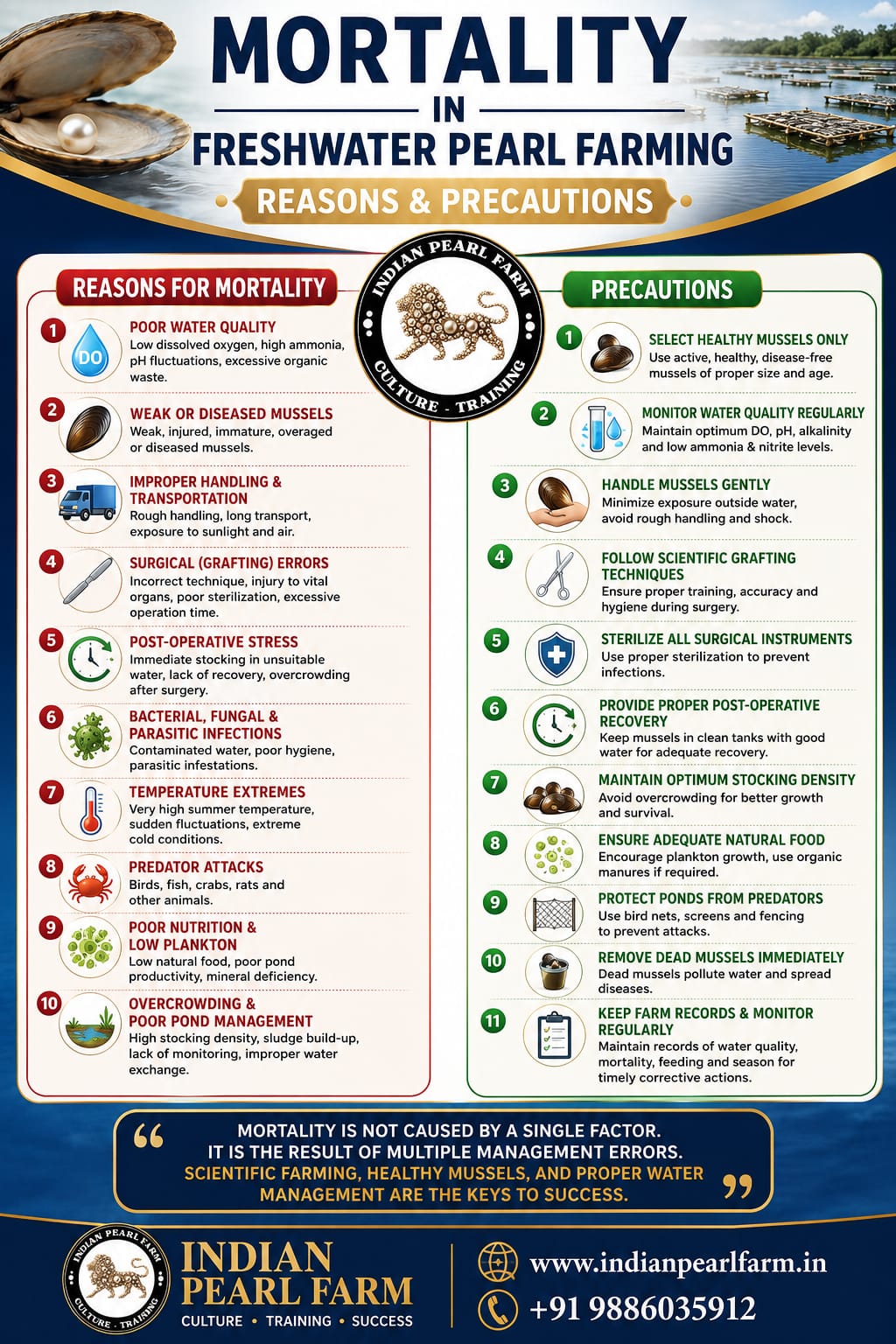
Mortality in Freshwater Pearl Farming – Reasons & Precautions
Freshwater pearl farming is an emerging and profitable aquaculture business in India. However, one of the biggest challenges faced by pearl farmers is the mortality of freshwater mussels. High mortality not only reduces pearl production but also increases operational costs and affects overall farm profitability. Fortunately, with scientific farming practices and proper management, most causes of mortality can be prevented.
Why Do Freshwater Mussels Die?
Mussel mortality is rarely caused by a single factor. It is usually the result of poor water quality, improper handling, diseases, environmental stress, or mistakes during pearl implantation. Understanding these causes helps farmers take preventive measures before significant losses occur.
Major Reasons for Mortality
1. Poor Water Quality
Water quality plays a vital role in the health of freshwater mussels. Low dissolved oxygen, high ammonia levels, extreme pH, and sudden temperature changes create stress and increase mortality.
Ideal Water Conditions
Dissolved Oxygen: Above 5 mg/L
pH: 7.0 – 8.5
Temperature: 22°C – 30°C
Ammonia: As low as possible
Regular water testing is essential for maintaining a healthy culture environment.
2. Improper Pearl Implantation
Pearl implantation is a delicate surgical procedure. If it is performed by untrained personnel or with unsterilized instruments, mussels may become injured or infected, leading to high mortality rates.
Proper training and hygienic surgical practices significantly improve survival.
3. Post-Operative Stress
After implantation, mussels require adequate recovery time in clean and well-oxygenated water. Rough handling, overcrowding, or immediate transfer to ponds can increase stress and reduce survival.
4. Diseases and Infections
Bacterial, fungal, and parasitic infections can weaken mussels, especially when water quality is poor. Maintaining hygiene and monitoring mussel health regularly helps prevent disease outbreaks.
5. Transportation Stress
Improper transportation causes dehydration, overheating, and physical damage. Healthy mussels should be transported in moist, cool, and well-ventilated containers to minimize stress.
6. Poor Nutrition
Freshwater mussels depend on natural plankton and microscopic organisms for food. Poor pond productivity results in weak mussels, slower pearl formation, and increased mortality.
7. Overstocking
Excessive stocking reduces food availability and dissolved oxygen while increasing waste accumulation. Maintaining the recommended stocking density helps improve survival and growth.
8. Predator Attack
Birds, crabs, rats, and other predators can damage mussels and reduce production. Protective fencing and regular pond inspection help minimize losses.
Best Practices to Reduce Mortality
To improve mussel survival and pearl production, farmers should follow these practices:
Select healthy and disease-free mussels.
Test water quality regularly.
Maintain proper dissolved oxygen levels.
Use sterilized surgical instruments.
Provide sufficient recovery time after implantation.
Avoid overcrowding.
Remove dead mussels immediately.
Monitor ponds regularly for predators and diseases.
Keep accurate farm records.
Benefits of Scientific Pearl Farming
By adopting scientific pearl farming techniques, farmers can:
Increase mussel survival rates.
Produce better-quality pearls.
Reduce production losses.
Improve farm profitability.
Build a sustainable pearl farming business.
Conclusion
Mortality in freshwater pearl farming is a manageable challenge. Most losses occur due to poor management practices rather than unavoidable factors. Maintaining good water quality, using proper pearl implantation techniques, and following scientific farming methods can significantly reduce mortality and improve pearl production.
Investing in proper training and regular farm monitoring is the key to successful and profitable freshwater pearl farming.
Indian Pearl Farm provides practical training, technical guidance, pearl farming kits, and consultancy for freshwater pearl farming across India.
Website: www.indianpearlfarm.in
Phone: +91 9886035912
0 Comments
No comments yet. Be the first to comment!