
Best Season for Pearl Culture and the Scientific Reasons
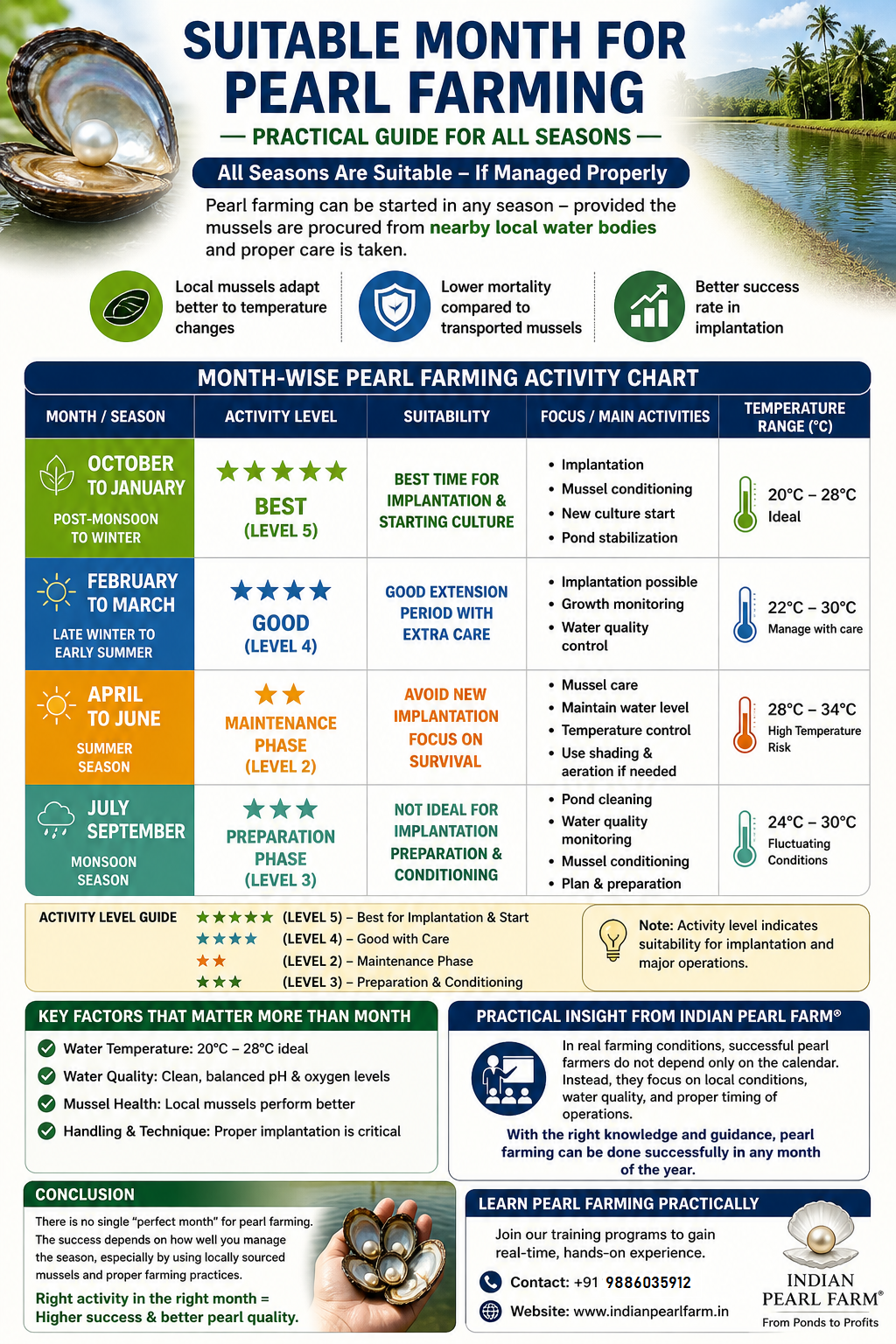
Pearl culture success depends heavily on selecting the right season. Water stability, food availability, environmental balance, and mussel health all play a vital role in achieving a high survival rate and producing quality pearls. In India, especially in states like Karnataka, Telangana, Tamil Nadu, Maharashtra, Odisha, and Andhra Pradesh, the best season for starting freshwater pearl culture is from October to February.
🌿 Ideal Season: October to February
This period offers a stable and supportive environment for mussels to recover from surgery, feed properly, and deposit nacre efficiently.
🌤 Why October to February Is the Best Season
1. Stable Water Temperature
Freshwater mussels thrive at a temperature range of 24°C to 28°C. Post-monsoon water remains thermally stable—neither too hot nor too cold—helping mussels recover quickly after nucleus implantation. Extreme summer temperatures above 32°C can stress mussels and reduce pearl formation efficiency.
2. High Natural Plankton Availability
After monsoon rains, ponds naturally develop a light green phytoplankton bloom. This acts as a natural food source, reducing the need for additional feeding. Higher natural food availability leads to faster nacre deposition and healthier mussels.
3. Improved Water Quality After Monsoon
Rainwater helps dilute impurities, increase dissolved oxygen, and reduce ammonia levels. The overall water quality improves, and mussels experience less stress, resulting in better survival and growth.
4. Reduced Biofouling Issues
Monsoon seasons often bring excessive algae and snail growth, which can suffocate mussels. Post-monsoon months see reduced biofouling, making maintenance easier and safer for pearl culture.
5. Calm and Stable Weather Conditions
There are no heavy rains, sudden temperature drops, or water-level fluctuations in this season. Mussels experience less stress, and farm operations like surgery, monitoring, feeding, and maintenance become easier.
6. Procurement & Transport Risk in Summer
Mussels are usually procured from North-Eastern and Eastern states like West Bengal, Assam, Odisha, and Bihar. During summer, transport temperatures can rise above 35–40°C, leading to:
- High heat stress
- Rapid oxygen depletion
- Increased mortality during transit
- Low survival upon arrival at the farm
Since transportation takes 24–48 hours, transporting mussels in summer is not advisable due to the harsh temperature conditions that drastically reduce survival.
❌ Seasons to Avoid
Peak Summer (March–June)
- High temperatures above 32°C
- Rapid bacterial growth
- Low oxygen levels
- High mortality rate
Peak Monsoon (July–September)
- Unstable water temperature
- Turbidity and muddy water
- High biofouling
- Poor visibility during maintenance
📌 Conclusion
The post-monsoon to early winter season (October–February) provides the most stable, nutritious, and safe environment for freshwater pearl culture. This season supports better mussel survival, faster nacre coating, easy maintenance, and smooth procurement — ensuring high-quality pearl harvests and overall farming success.
Choosing the right season is the first step toward building a profitable and sustainable pearl farming business.