
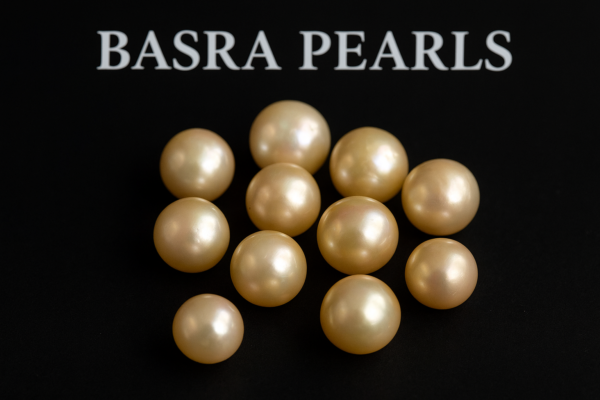
Basra Pearls – The Timeless Natural Treasure of the Gulf
🌍 Origin and History
The name “Basra Pearls” comes from the ancient city of Basra, which served as a global hub for pearl trading. The actual pearls were harvested from the waters of Bahrain, Kuwait, and Qatar, where natural saltwater oysters like Pinctada radiata thrived. Indian merchants from Hyderabad, Surat, and Bombay were key players in this historic trade. Between the 16th and 20th centuries, Basra Pearls adorned the crowns and necklaces of kings and queens, representing wealth and divine grace.
💎 Natural Formation (No Cultivation)
Basra Pearls are 100% natural — they are not cultured or farmed. These pearls form naturally when a small particle enters the oyster, triggering nacre secretion over several years. The Pinctada radiata oysters in the Gulf create these pearls without any human intervention, making each Basra Pearl one-of-a-kind and irreplaceable.
✨ Physical Characteristics
- Color: Creamy white to golden, with soft pink or green overtones known as “orient.”
- Shape: Mostly round or oval; perfectly round Basra Pearls are extremely rare.
- Lustre: Deep and glowing — a silky shine unique to natural pearls.
- Size: Generally 2 mm to 10 mm in diameter.
- Texture: Smooth surface with fine nacre layers that enhance the pearl’s natural beauty.
💰 Value and Market Demand
Basra Pearls are among the most expensive natural gems due to their rarity. Their prices range from ₹5,000 to ₹50,000 per carat or even more. Because natural pearl harvesting in the Persian Gulf has declined sharply, authentic Basra Pearls are collector’s items today, often sold with gemological certificates of authenticity. Antique Basra jewelry remains highly sought after by investors and connoisseurs.
🕌 Cultural and Historical Significance
In India, Basra Pearls are a part of royal heritage — worn by the Nizams of Hyderabad and Indian Maharajas. They are also associated with astrological benefits of the Moon (Chandra), believed to promote peace, prosperity, and emotional balance. Even today, the traditional pearl markets of Hyderabad, like Laad Bazaar and Pathergatti, continue to trade in Basra-inspired jewelry designs.
⚖️ Basra Pearls vs Cultured Pearls
| Feature | Basra Pearls | Cultured Pearls |
|---|---|---|
| Origin | Natural formation in wild oysters | Formed through implantation by humans |
| Location | Persian Gulf (Iraq, Bahrain, Qatar) | Japan, China, India, etc. |
| Human Involvement | None | Required |
| Rarity | Extremely rare | Commonly available |
| Price | ₹5,000 – ₹50,000+ per carat | ₹100 – ₹5,000 per piece (average) |
| Symbolism | Purity, Royalty, Divine Grace | Beauty, Fashion, Livelihood |
Modern Scenario
With the rise of cultured pearls from Japan, China, and India, the availability of genuine Basra Pearls has drastically decreased. Today, they are found only in private collections, antique stores, and museums. However, their unmatched natural glow continues to inspire pearl farmers and jewelers worldwide.
🌟 Conclusion
Basra Pearls represent nature’s perfect artistry — untouched, pure, and radiant. Their history continues to inspire modern pearl culture techniques, including those practiced at Indian Pearl Farm. By studying the quality and beauty of Basra Pearls, learners and entrepreneurs can set higher standards for producing premium cultured pearls in India.
Indian Pearl Farm – Pioneering the future of sustainable pearl culture inspired by timeless traditions.